

Instructions for using the Terminal to create password protected zip files in Mac.
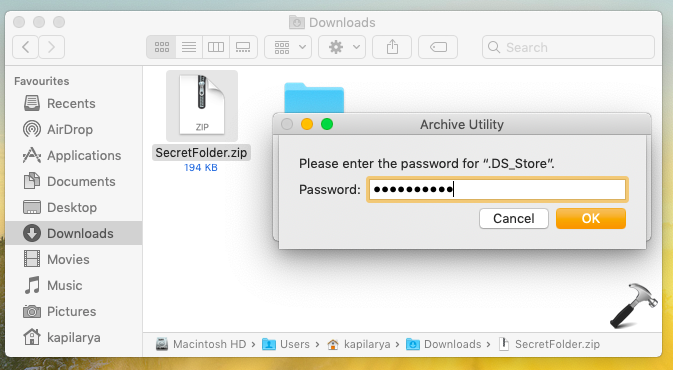
How to Extract (Unzip) a Password Protected Zip File on macOS You can to open the Terminal program and use the command unzip. Anyway if you still are experiencing difficulty, please e-mail us to email protected in order to proceed to send you another alternative method for your purchased software. From the zip FAQ: Finally, note that the original encryption scheme used in all versions of Zip (as well as PKWARE's older products) is quite weak; see 'A Known-Plaintext Attack on the PKZIP Stream Cipher' (also as gzip'd PostScript) by Eli Biham and Paul C. Recent versions of PKZIP and WinZip include stronger AES encryption, and PGP.
Type the same password you used while creating the disk image and click OK. (Note: Do not check the box for ‘Remember password in my keychain.’ If you do, it may defeat the purpose. The saved password will fill in automatically if someone has your Mac or knows its password.) After you enter the password, you will see a disk image on the. Drag the folder you want to zip onto your desktop; Open terminal and navigate to your desktop; Type in zip -er filename.zip fileorfolderyouwanttocompress (hit the tab key to help you auto-fill the name of the file or folder you want to compress) Then enter a password, twice; Done 😀.
- Create a Folder on the Desktop.
- Place the Files you wish to Zip within the folder.
- Select the Search Icon in the upper right corner.
- Search for the Terminal.
- Select Terminal.
- Enter zip -er NAMEOFZIPFILE.zip
- Enter a space.
- Drag and Drop the Folder on the desktop into the terminal.
- Select Enter/Return.
- Enter a Password.
NOTE: It will not visually display anything to know you are typing when entering a password. - Reenter the Password.
- Select Enter/Return.
- To get to the new ZIP file, select Finder then All My Files.
Did you find this article useful?
Macos Open Password Protected Zip
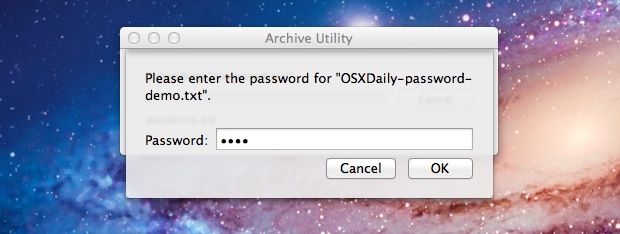
Mac Password Protect Zip File
You Might Also Be Interested In