
In the end, download and copy and paste these files into the EFI Partition in the USB. Clover Configurator; MultiBeast 11.3.0; The USB drive is now completely ready for installing macOS on Windows or on Mac itself. So that’s how to create bootable USB Installer for macOS Catalina on Windows 10 with TransMac. This works perfectly now. Another reason why you might want to partition your Mac is so that you can create a partition for Time Machine to back up to, alternatively you might want to create separate partitions for the. Create a Bootable Ubuntu USB Drive in Mac OS X As I said earlier, creating a bootable USB in Mac OS X is a tricky procedure, be it for Ubuntu or any other bootable OS. But don’t worry, following all the steps carefully will have you going.
Enter the create partition primary command and press Enter to complete the process. Once you formatted the USB flash drive with a GPT partition, you can use the instructions mentioned above to use TransMac to create a bootable media, but this time skip steps No. 5 through 10 and continue on step 11. Generally speaking, you don't need to create a recovery partition for your Mac: since the launch of Lion (when Apple stopped selling boxed copies of its operating systems, so it knew buyers wouldn.
Macos Create Bootable Partition
With a bootable Ubuntu USB stick, you can:
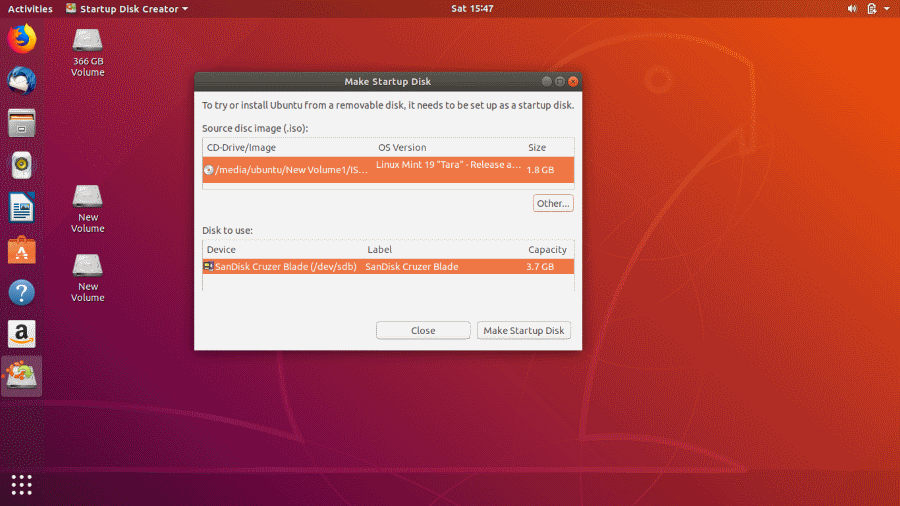
- Install or upgrade Ubuntu, even on a Mac
- Test out the Ubuntu desktop experience without touching your PC configuration
- Boot into Ubuntu on a borrowed machine or from an internet cafe
- Use tools installed by default on the USB stick to repair or fix a broken configuration
Creating a bootable USB stick is very simple, especially if you’re going to use the USB stick with a generic Windows or Linux PC. We’re going to cover the process in the next few steps.
Create Efi Boot Partition Mac
Apple hardware considerations
There are a few additional considerations when booting the USB stick on Apple hardware. This is because Apple’s ‘Startup Manager’, summoned by holding the Option/alt (⌥) key when booting, won’t detect the USB stick without a specific partition table and layout. We’ll cover this in a later step.